

Improper Cargo Loading and Commercial Truck Liability
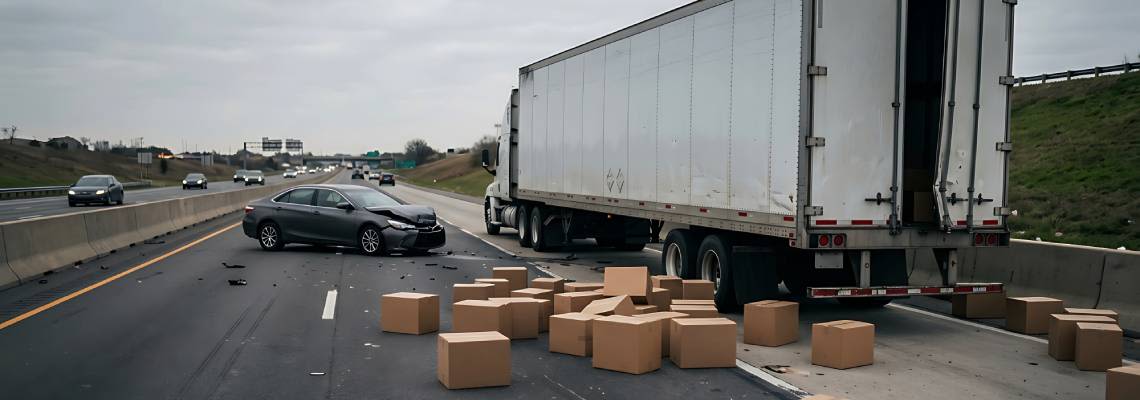
The truck driver may seem like the obvious person to blame after a crash, but the problem may have started before the truck ever reached the road. Improperly loaded or secured cargo can shift, destabilize a truck, and contribute to a serious collision. When that happens, the driver may not be the only responsible party; the motor carrier, shipper, loading company, or another business involved with the cargo may also bear liability.
Slechter Law Firm Attorneys at Law represents people injured in commercial truck accidents in Louisville and Lexington, Kentucky. When cargo loading may have contributed to a collision, tracing what happened before the truck entered the road can help explain why the crash occurred.
The Risks of Improper Cargo Loading
Improper loading can change a commercial truck's balance, stability, and handling. Cargo that shifts inside a trailer can alter the vehicle's center of gravity, while an unbalanced load can make the truck harder to control during turns or sudden maneuvers.
Excess weight can also affect a truck's handling and braking and place additional demands on its tires and other components. A loading problem can involve improper weight distribution, inadequate tiedowns, damaged securement equipment, insufficient blocking or bracing, or failure to restrain cargo that can roll.
Cargo that escapes from a truck creates a different hazard. Kentucky law governing shifting and spilling loads requires vehicles to be constructed to prevent their contents from escaping and generally requires loads susceptible to shifting or spilling to be covered when the vehicle travels more than one mile on a public highway.
The Federal Motor Carrier Safety Administration's cargo securement rules separately require commercial vehicles to immobilize or secure cargo against shifting or falling. These requirements matter when falling cargo or road debris contributes to a collision.
Who Is Liable for Improper Cargo Loading?
Responsibility may fall on the driver, motor carrier, loading company, shipper, or another business involved with the cargo, depending on who controlled the work that contributed to the crash.
Federal courts applying Kentucky law have recognized an important distinction when a shipper loads the freight. Under the rule commonly known as the Savage rule, the carrier generally has primary responsibility for safe loading, but a shipper that performs the loading may be responsible for a hidden loading defect that would not be discovered through ordinary observation.
If the defect is apparent, the carrier generally remains responsible. The Kentucky Supreme Court has not directly adopted this rule, so liability still depends on the particular facts and applicable law. If failed securement equipment or a trailer defect contributed to the crash, responsibility for inspecting or maintaining that equipment may also be relevant.
Cargo Inspection Requirements for Truck Drivers
Truck drivers have ongoing responsibilities to check cargo while transporting it. A load that was secure when a truck left a facility may shift or loosen during the trip.
Under federal cargo inspection requirements, a driver generally must ensure that cargo is properly distributed and adequately secured before driving. Subject to regulatory exceptions, the driver must inspect the cargo and its securement devices within the first 50 miles and make necessary adjustments. Further inspections are generally required after a change in duty status or after three hours or 150 miles of driving, whichever occurs first.
Those inspection requirements do not apply when cargo is loaded in a way that makes inspection impracticable, when the vehicle is sealed, or when the driver has been ordered not to open it. Whether an exception applies can therefore matter when determining what the driver could reasonably have inspected.
What Evidence Shows Improper Cargo Loading?
Photos, shipping records, inspection records, and securement equipment can help show whether cargo was improperly loaded or secured. Some of this evidence can change or disappear quickly once the truck and freight are removed from the crash scene.
Relevant evidence may include:
Photos of the cargo and its position after the crash
Bills of lading, weight tickets, and loading records
Tiedowns, straps, chains, blocking, and other securement equipment
Driver inspection records and electronic logging data
Vehicle and trailer inspection or maintenance records
Dashcam, surveillance, or roadway video
Statements from drivers, loaders, witnesses, and others involved
The condition of the securement equipment can help show what went wrong. A broken strap raises different questions than an intact strap that was never properly attached.
A preservation letter can ask a carrier, shipper, or other party to retain records and evidence relevant to the crash, rather than allowing potentially useful material to be lost through routine disposal or deletion. The records that exist and how long they must be retained can vary by type.
For someone injured in a negligently loaded truck accident, preserving this evidence can help distinguish improper loading from a missed inspection, equipment failure, or another cause.
When A Cargo Violation Causes A Crash
A cargo or weight violation can be relevant evidence, but it must still connect to the crash and the injuries being claimed. An overweight truck or improperly secured load does not establish liability for an unrelated collision.
Kentucky also allocates fault when more than one party contributes to an injury. Under Kentucky's comparative-fault rules, the fact-finder assigns each party a percentage of total fault and allocates damages accordingly. An injured person's own share of fault can reduce the amount recovered rather than automatically barring recovery.
Time limits also matter. Under Kentucky's motor vehicle limitations law, you generally must file a motor vehicle tort action within two years after the injury or the date of the last qualifying reparation payment, whichever occurs later. Different circumstances can affect the deadline, so you should determine the filing period from the facts of the specific claim.
Slechter Law Firm Can Investigate Your Truck Accident
Cargo-related truck crashes can raise questions about conduct that occurred long before the collision itself. Attorneys Mat A. Slechter and Meredith Kirklin Slechter founded Slechter Law Firm in Louisville, Kentucky, to represent individuals, not insurance companies or large corporations.
The firm can investigate the circumstances behind the load and determine how a loading, securement, weight, or inspection failure may affect your claim against the businesses and individuals involved.
If improper cargo loading may have contributed to your injuries, the Louisville truck accident attorneys can investigate the parties and evidence behind the load. Call today to discuss the crash and what may have caused it.